We break it down into three imperatives:
- Brand Affinity: make them fall for the brand, not just the glass
- On-Trade Conversion: win the order, not just attention
- Off-Trade Transition: turn moments into movement to drive real sales
Historically the realm of Premium players, could this be the moment Prestige Spirits step in?
The game is shifting. Here’s how to play it.
Rethinking the game: beyond mixology towards flagship ownership
Mixology has become table stakes for premium spirits. It brings relevance, visibility, and a seat at the cultural table, and for many, that was enough.
But today, everyone is doing it. It is no longer a competitive edge. Mixology is a visibility play, effective to be seen, but insufficient to stand out, drive loyalty, or justify a price premium.
For brands seeking more than presence (for those aiming to premiumize, reignite desirability, or build deeper consumer connection) the question is no longer “Should we do cocktails?” but “How do we make them count?”
In a landscape oversaturated with seasonal serves and marketing noise, the next frontier is not another activation. It is a long-term strategic asset:
Owning a permanent, branded flagship serve, a cocktail so inseparable from the brand that it accelerates demand, builds equity, and shapes consumer culture across both on- and off-trade.
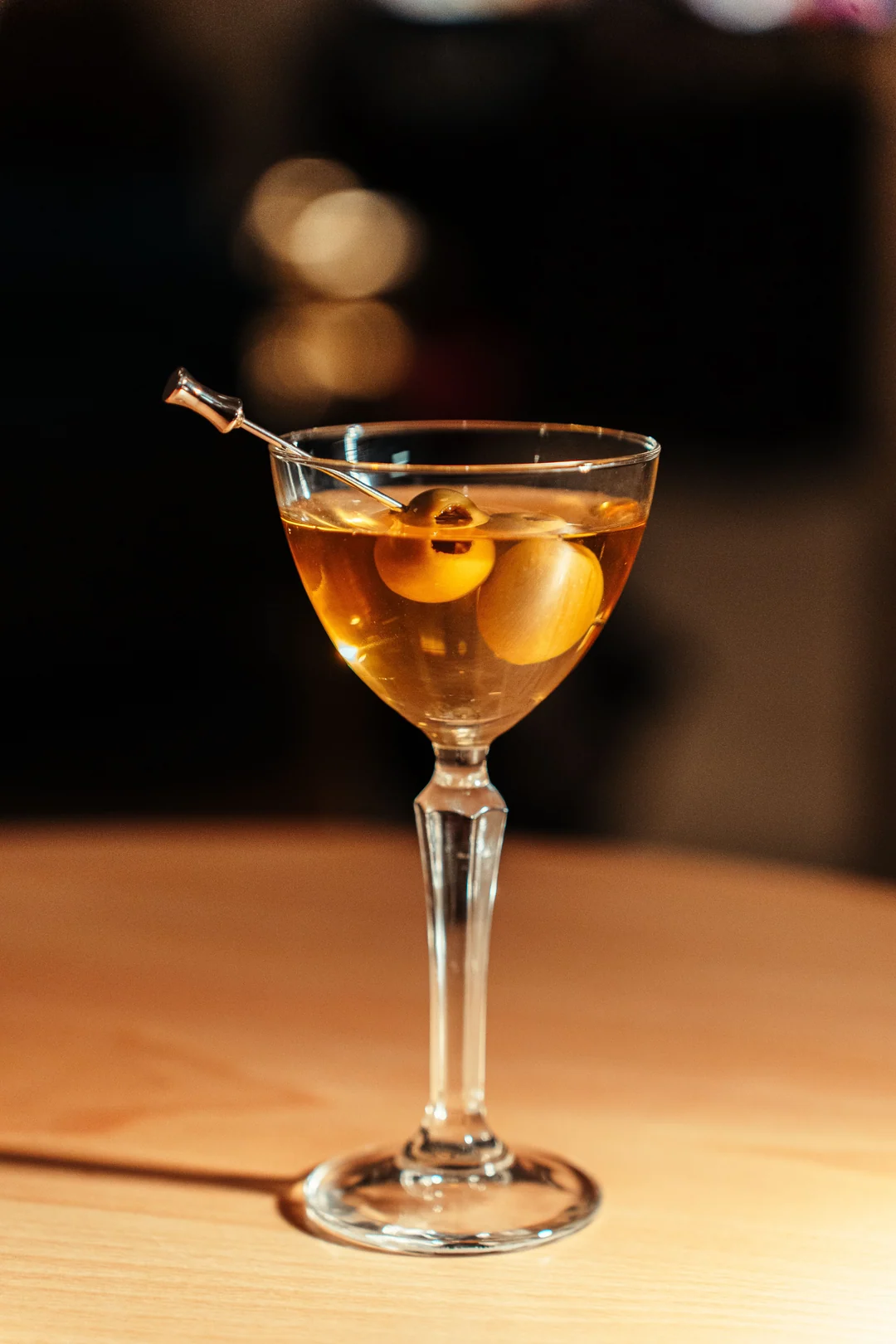
Very few Premium brands have truly committed to owning a flagship serve: only c. 30 brands to date. But when they do, the impact is undeniable: think Aperol Spritz, Campari Negroni, Pimm’s Cup, Hendrick’s & Tonic… Proof that when done right, a flagship serve is not just a cocktail, it is a strategic powerhouse.
What’s the real business play behind the launch of a flagship serve?
If your flagship serve does not move bottles off the shelf, it misses the point.
A flagship cocktail is only a true growth driver if it converts on-trade moments into brand affinity and, crucially, incremental off-trade sales. Hype at the bar is just the starting block, not the finish line.
3 must-have ingredients for success
- Brand Affinity: make customers fall in love with the brand, not just the drink If you do not make them fall in love with your brand, every move beyond the first is a lost cause. Your cocktail is your Brand champion: its mission is to forge loyalty and emotional resonance that endures far beyond the glass.
- On-Trade Conversion: stand out on the menu and win the order Here the war is fierce: the battlefield is crowded with legendary classics and trending newcomers, each fighting for attention. No matter the quality of your serve, if it is not seen, it is not chosen, and your champion never even enters the arena.
- Off-Trade Transition: engineer the path from bar to basket The ultimate endgame: turn on-trade momentary wins into enduring incremental market share. Every order at the bar must open a new front, guiding consumers from discovery to bottle purchase and expanding your brand’s territory bottle by bottle.
Brand Affinity: make customers fall in love with the brand, not just the drink
1. Make it a brand manifesto
A flagship cocktail is not about appealing to the widest possible audience and boosting glass sales at all costs. It is a strategic tool for targeted client recruitment and should be treated as a key opportunity to assert your brand’s identity. It can be a radical creation or a bold reappropriation, as long as it tells your story. Whether the cocktail is original or reinvented, your brand should be unmistakable: the serve must embody your DNA in both flavor profile and sophistication level.
Think Pimm’s Cup: the cocktail itself is the brand, visually iconic, and inseparable from British summer rituals. Its distinctive build, cultural codification, and historical authenticity make it a powerful lever for recruiting high-affinity consumers with zero category dilution.
2. Ground it in culture and authenticity
On-brand is key but it is not enough. If you want a flagship serve that endures beyond summer, you need to anchor it in what does not change: heritage, terroir, origin.
In a landscape saturated with seasonal aesthetics, authenticity is the only long-term differentiator. Brand expression evolves. Cultural legacy does not. Without that cultural grounding, your cocktail risks becoming a fleeting trend, not a lasting Brand asset.
Think Bacardi & Coke (Cuba Libre): rooted in Cuban history, born as a celebratory toast for independence, it embeds the brand into a universal drink with political and emotional resonance, a lasting symbol of freedom, heritage, and Latin identity.
3. Control the serve beyond liquid
A flagship cocktail is not just about the recipe. It is about how it is delivered, and glassware is key.
Some brands will invest in proprietary glassware. Most will not, and do not need to. But all must define the serve. Is it a stemmed glass? Which one? A tumbler? A coupe? These choices must be made deliberately and codified. Without clear guidelines, you lose control of the brand experience, and with it, the emotional impact.
Think Smirnoff’s Moscow Mule: created in 1941 with its iconic copper mug, it turns a simple vodka mix into a branded experience, making the drink instantly recognizable and inseparable from Smirnoff’s identity, even 85 years after.
On-Trade Conversion: stand out on the menu and win the order
1. Activate on-trade partners as your first sales force
On the menu, your cocktail competes with icons. But real influence lives behind the bar. The bartender is your frontline and your best ally. To win ‘top-of-mind’ recommendation status, the cocktail must make business sense for them, not just for you. Before promising volumes, build a strong business case with margins, speed and simplicity in mind.
A true flagship serve is not just branded, it is commercially sound.
Think Aperol Spritz, which did not win by taste alone. It won because it was engineered for operational ease and economic advantage: no perishable ingredients, lightning-fast preparation, and a comparable RSP to higher-cost cocktails, driving consistently strong margins.
2. Build visibility to reach critical mass
A flagship cocktail is only strategic once it enters collective awareness. It must be seen, ordered, and known, even by those who do not drink it.
Reaching that tipping point requires a marketing layer within the on-trade: light-touch materials with high-impact presence. Think bold visual codes, artistic POSM, and contextual storytelling that makes the serve unmissable.
You are not launching a product. You are creating a reference. Without scale and visibility, discovery stalls, and the cocktail never becomes part of the culture.
Think Hendrick’s & Tonic: who made the cucumber garnish iconic and unmissable through theatrical rituals, bartender advocacy, striking POSM and high-impact campaigns. Hendrick’s transformed its G&T into an Instagrammable reference point, propelling the cocktail (and brand) to cult status.
Off-Trade Transition: engineer the path from bar to basket
1. Make it replicable and desirable to recreate
A cocktail cannot drive bottle sales if it cannot be made at home. Replicability is essential, but it must be calibrated to your audience.
Avoid specialist tools, limit unnecessary steps, and make the experience feel within reach. But do not oversimplify by default. Match the level of complexity to the consumers you are targeting.
Then close the gap: share the recipe where it counts, on the bottle, on shelf, via QR code, through social. And do more than explain how: create the desire to recreate. Showcase the moment, the ritual, the lifestyle, because what converts is not just the serve, it is the story they want to be part of.
Think Monkey Shoulder’s Ginger Monkey: a no-tools, no-fuss serve built around mass replicability and high recall. By anchoring its “Made for Mixing” strategy to this cocktail, with visible on-pack recipes, Monkey Shoulder turned a simple highball into a high-frequency driver of at-home purchase and one of the fastest-growing Scotch whiskies globally.
2. Align pricing with the endgame
By-the-glass lowers the barrier to trial: that is its power. But trial is only valuable if it leads to conversion. The price of the cocktail must be consistent with the price of the bottle it recruits into. If the leap feels too steep, the funnel breaks.
You are not optimising for cocktail volume, you are recruiting bottle buyers. That means pricing must make sense from both ends: relevant in the venue, but anchored in off-trade purchasing power.
Think Suntory Highball: positioned as an affordable by-the-glass option in izakayas & matched to the accessible price point of an off-trade bottle. By calibrating experience and price across both channels, and reinforcing it with the RTD cans, Suntory created a seamless bridge from trial to purchase, driving one of the most successful whisky category revivals.
3. Trigger impulse at shelf level
Conversion does not end with awareness. It often hinges on the moment of purchase. For brands with strong equity and sufficient retail leverage, on-shelf co-placement with accessories and/or key cocktail ingredients can serve as a powerful conversion trigger. It reinforces the recipe, simplifies the buying act, and turns intent into immediate action. It is not for every brand, but when the conditions are right, it transforms the shelf into a powerful call to action.
Think Havana Club Mojito Kits: by co-packaging the rum with branded accessories and recipe the brand makes the at-home ritual instantly accessible for consumers, reinforcing Havana Club’s leadership in the mojito occasion.

Prestige Spirits & the flagship serve: is the door opening?
Historically, the Prestige Spirits world has stayed firmly outside the mixology arena. Craft, rarity, and ritual have reigned supreme, leaving little room for cocktails in narratives built around purity and reverence. For decades, the idea of mixing was seen as dilution: of value, heritage, or control.
But a shift may be starting.
In ultra-controlled settings (brand homes, private apartments, high-touch DTC moments…) signals are emerging. Names like The Macallan or Clase Azul are cautiously experimenting with mixology, not as a volume play, but as a cultural one. The goal is not mass recruitment, but relevance, storytelling, and enhancing long-term brand affinity.
It’s still early. The door is only ajar. But the logic is compelling. Flagship cocktails have proven their strategic power in the Premium segment. For the rare few who do it well, they unlock loyalty, justify price premium and create new emotional access points to the brand.
So what would it take for a Prestige House to go further?
- Not a seasonal serve. A true flagship: exclusive, curated, enduring.
- Not a loss of control. A branded expression, housed within the world of the maison.
- Not marketing noise. A cultural marker that elevates, rather than compromises, perceived value.
Is the era of the Prestige flagship serve about to begin?